
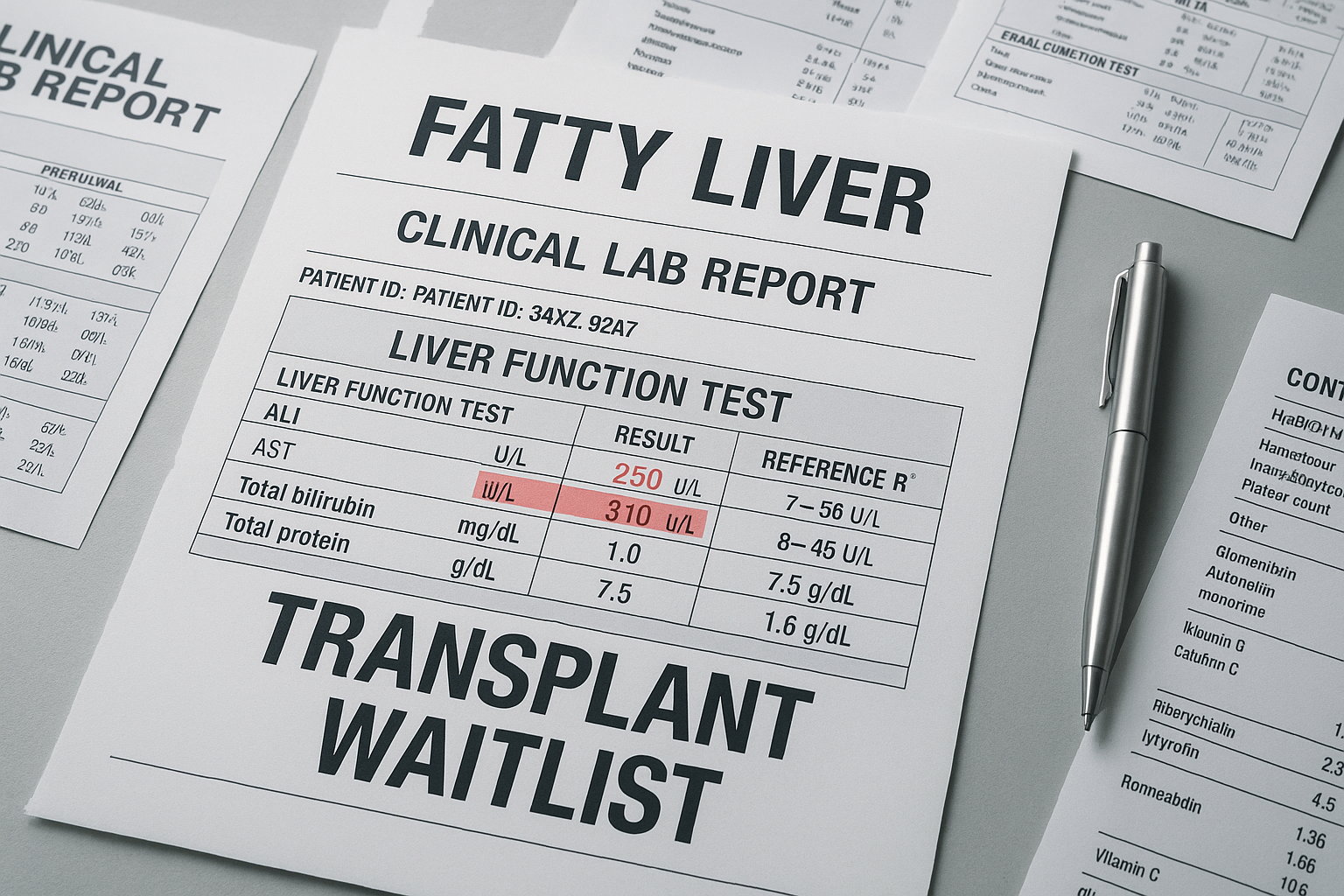
Getting a blood test report back with flagged liver enzyme values can be unsettling. Numbers in red, abbreviations you have never heard of, and a reference range that does not quite tell you what any of it actually means. You are not alone in feeling confused, and the good news is that understanding these values is simpler than it looks.
The liver function test, or LFT, is one of the most commonly ordered blood panels in medicine. It measures a set of enzymes and proteins produced by the liver. When the liver is under stress or injured, some of these enzymes spill into the bloodstream in higher-than-normal quantities, and that is what shows up in your report.
ALT and AST: The Key Liver Enzymes
A mildly elevated ALT does not automatically mean something serious. Context matters enormously. The trend over time, the ratio between values, and the patient’s overall picture all shape what those numbers really mean.
The two most talked-about enzymes are ALT (alanine aminotransferase) and AST (aspartate aminotransferase). ALT is considered the more liver-specific of the two. Elevated ALT almost always points to the liver, while AST can also rise with muscle injury or heart problems. When both are elevated together, the liver is almost certainly the source.
ALP: Understanding Bile Duct Health
ALP, or alkaline phosphatase, is another enzyme worth knowing. It tends to rise when there is a problem with the bile ducts rather than the liver cells themselves. Elevated ALP alongside elevated bilirubin can point toward a blockage or a condition called cholestasis, where bile is not flowing properly.
Bilirubin and Albumin: The Bigger Picture
Bilirubin is the yellow pigment produced when red blood cells break down. The liver processes it and excretes it through bile. When bilirubin builds up in the blood, it causes jaundice, the yellowing of the skin and eyes that many people associate with liver disease. A raised bilirubin level alongside other enzyme abnormalities usually means the liver is struggling with its processing work.
Albumin is a protein the liver manufactures, and it tells a different part of the story. Low albumin suggests that the liver has been impaired long enough that its production capacity is affected. This is a marker of chronic liver disease rather than acute injury, and a falling albumin level in someone with known liver disease is a sign that warrants prompt attention.
Numbers on a page only tell part of the story. I always remind patients that the same report can mean very different things depending on whether you have been drinking, taking a new supplement, or recovering from a viral illness.
Mild elevations, say one to two times the upper limit of normal, are quite common and often turn out to have benign explanations. Fatty liver, a recent intense workout, certain medications, and even herbal supplements can push these values up temporarily. That said, any persistent elevation or values beyond three times normal deserves a proper evaluation by a liver doctor in Kochi or wherever you are based.
The important thing is not to either panic or dismiss what you see in the report. A single abnormal result needs to be interpreted in context, and often a repeat test a few weeks later tells a far clearer story. Your liver function test is a starting point for a conversation, not a verdict.
Dr. Vishnu Girish is a hepatologist and liver specialist based in Kochi, Kerala. He offers in-person consultations at his hepatology clinic in Kochi and online consultations for patients across India. Visit liverbyvishnu.com