
By Dr. Vishnu Girish, MD, DM | Hepatologist in Kochi
In my clinic, I rarely see fatty liver or diabetes walking in alone.
They tend to arrive together, one quietly worsening the other. A patient comes in for blood sugar control and I find fatty changes on their ultrasound. Another comes in for liver enzymes and their fasting sugar turns out to be borderline. This is not a coincidence. It is one of the most consistent patterns in metabolic medicine today.
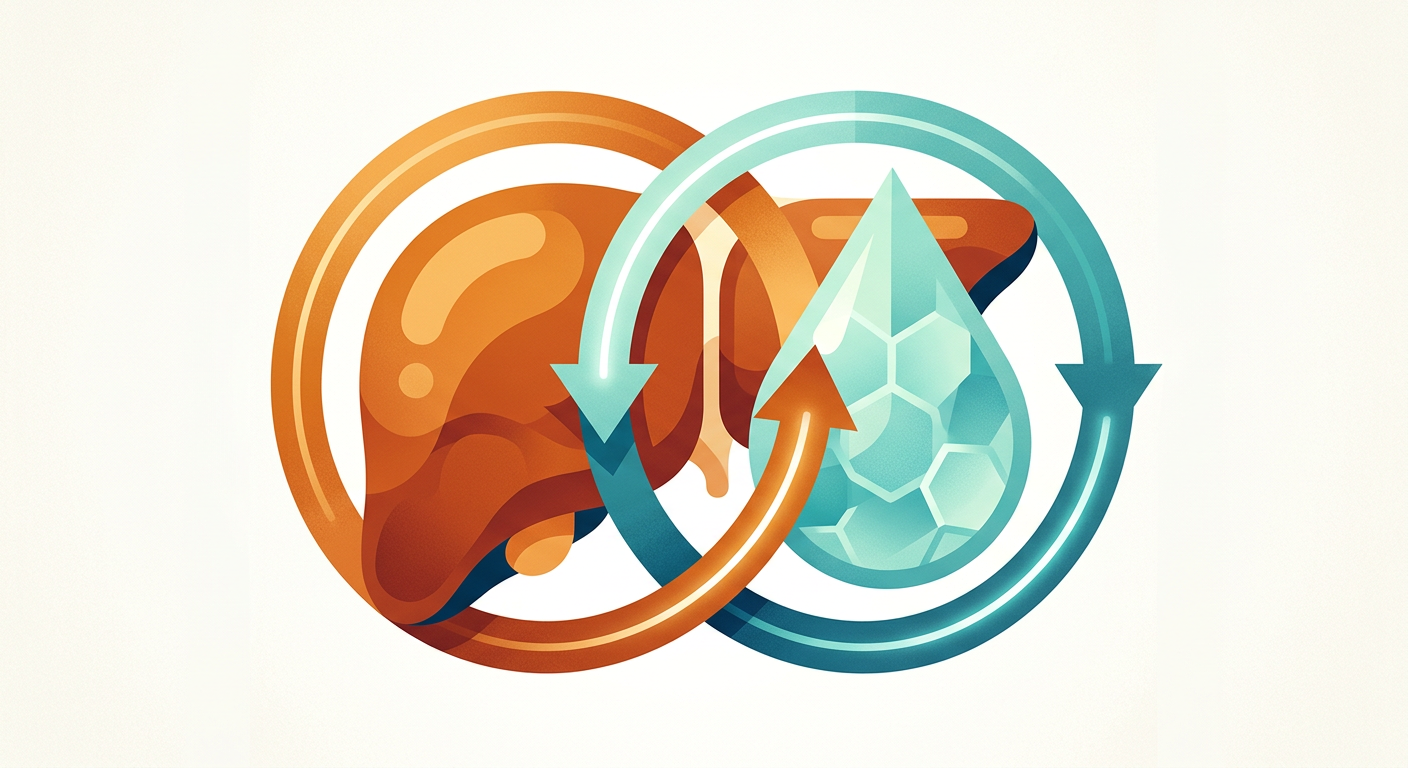
Fatty liver disease, now called MASLD (metabolic dysfunction associated steatotic liver disease), and type 2 diabetes share the same root problem: insulin resistance. When the body’s cells stop responding properly to insulin, the liver ends up storing more fat than it should. That stored fat, in turn, makes insulin resistance worse. It becomes a loop, each condition feeding the other.
The numbers make this hard to ignore. Global data suggests more than half of people with type 2 diabetes also have fatty liver, and in India that figure runs even higher, with some studies reporting MASLD in 60 to 85 percent of Indian patients with diabetes. This is a meaningfully higher burden than what is seen in Western populations, and it is one reason Indian diabetes and liver societies now recommend that every patient with type 2 diabetes be screened for fatty liver, not just those who look overweight.
Why Indian bodies carry more risk at lower weight
This is the part that surprises most patients. Asian Indians tend to store visceral fat, the fat around internal organs, at a lower body mass index than Western populations. A person who looks only mildly overweight on the scale can still carry significant liver fat and insulin resistance. This is why Indian-specific guidelines now use lower BMI and waist circumference cutoffs to flag risk, rather than relying on international standards built around different body types.
“I have had slim patients with completely normal looking bodies whose liver was quietly carrying years of fat deposition. The scale does not tell the whole story.”
The clinical stakes go beyond the liver itself. Diabetes accelerates the progression of fatty liver toward scarring, or fibrosis, and fibrosis is what ultimately determines long-term risk of cirrhosis and liver-related death. At the same time, having fatty liver roughly doubles a person’s risk of developing type 2 diabetes down the line. Neither condition is a bystander to the other.
“Treating the liver and treating diabetes are not two separate jobs. In most of my patients, they are the same job seen from different angles.”
The reassuring part is that this loop can be interrupted. Weight loss of even 7 to 10 percent, consistent physical activity, and good glycaemic control meaningfully reduce liver fat and can even improve early fibrosis. Screening tools like the FIB-4 index, calculated from a simple blood test, combined with an ultrasound or FibroScan, give a clear picture without needing a biopsy in most cases. If you have type 2 diabetes and have never had your liver specifically checked, this is worth raising with your doctor or a liver specialist in Kerala at your next visit. As always, any specific treatment decisions should be made with your doctor.
Frequently Asked Questions
Q: If my liver enzymes are normal, can I still have fatty liver from diabetes?
Yes. Liver enzymes can stay completely normal even when a person has significant fatty liver or early fibrosis. This is exactly why doctors now recommend dedicated screening tools rather than relying on blood tests like ALT alone.
Q: Does treating diabetes automatically fix fatty liver?
Better sugar control helps, but it does not always fully resolve fatty liver on its own. Weight management, activity, and in some cases specific medications aimed at the liver may also be needed, so both conditions are best managed together.
Q: Should every diabetic patient in Kerala get a FibroScan?
Not automatically, but current consensus recommends at least an initial screen with the FIB-4 blood test or ultrasound. A hepatologist in Kochi can advise whether a FibroScan is needed based on those initial results.
Q: I do not have diabetes but I do have fatty liver. Am I at risk of developing diabetes?
Fatty liver approximately doubles the risk of developing type 2 diabetes over time, so it is worth monitoring your blood sugar periodically even if your current readings are normal.
Q: Can I get an online consultation to discuss my diabetes and liver reports together?
Yes, Dr. Vishnu Girish offers online consultation for patients across Kerala and India who want a combined view of their diabetes and liver health, alongside in-person visits at his Kochi clinic.
Dr. Vishnu Girish is a hepatologist and liver specialist based in Kochi, Kerala. He offers in-person consultations at his hepatology clinic in Kochi and online consultations for patients across India. Visit liverbyvishnu.com